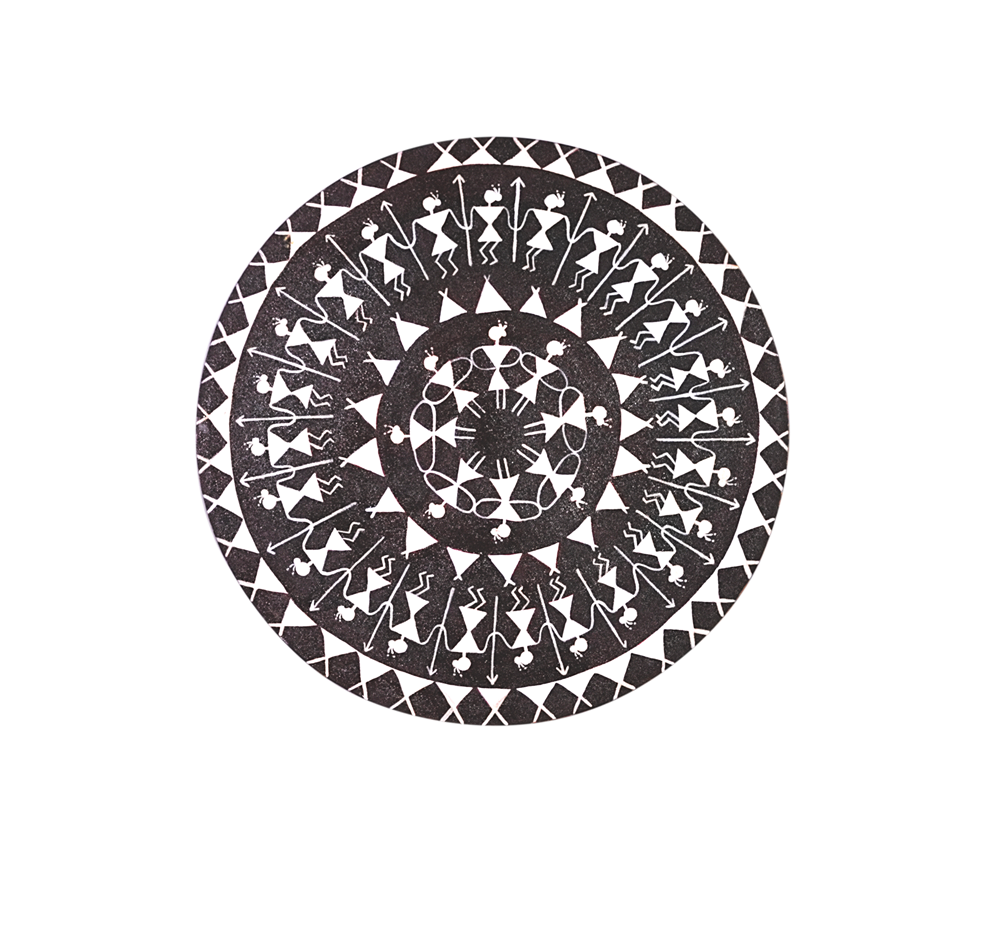
DescriptionIndia is blessed with many traditional folk-art forms. Most of these artforms are full of splendorous and vibrant colours. Unlike them Warli paintings is primarily known for its primitive design and use of only two colours Indian red and white.Warli paintings take their name from the tribal community on the northern edge of the Sahyadri Range in Maharashtra, primarily in Thane and Palghar districts and Dangs region of Gujarat. The origin of the Warli art style dates back to the 10th century AD and has traditionally been used by the people from the Warli tribe to decorate walls of their mud houses on special occasions like harvest and weddings. The most important aspect of the painting is that it doesn’t depict any mythological characters or images of deities but portrays the circle of life and respect for nature, farming and wildlife.Traditionally Warli art colours were developed from natural materials such as rice paste and natural glue, which were used to paint on the austere brown mud walls to form a striking contrast. The paintings are usually created on brown backgrounds that would be made from cow dung cakes and mud. Figures and shapes are drawn on the background using a white pigment, created from a blend of gum, water, and rice. Bare hands or Bamboo sticks served as the artists’ brush.The uniqueness of Warli paintings lie in the fact that they are always drawn in specific geometric shapes such as circle, triangle and square and each shape symbolizes something distinct. For instance, the triangle symbolises mountains and trees. The square symbolising fertility and the circle represents the sun and moon